
Bone Broth – How to Make Homemade Bone Broth
Mar 05, 2026
How to make nutrient-dense homemade bone broth alongside an evidenced-informed perspective from a Registered Dietitian on the unique benefits this traditional broth has to offer!
Bone broth has become trendy in wellness spaces. However, long before it was trendy, it was a traditional way of extracting nutrients from bones through slow cooking!
Bone broth is a unique food that is rich in collagen, amino acids, and minerals. Not to mention it tastes delicious!
As a Registered Dietitian in Saskatoon supporting women across Saskatchewan with pregnancy, menopause, digestion, and athletic training, I see bone broth as a supportive addition to a well-rounded nutrition strategy.
While collagen powders and bone broth supplements are widely marketed, my preference as a dietitian is to return to traditional food-based options whenever possible. A homemade broth provides nourishment in its simplest form — without relying on supplements that may be pricey, unregulated, or contaminated in the manufacturing process.
Let’s break down the benefits of bone broth and how to make a homemade version in the slow cooker or pressure cooker!
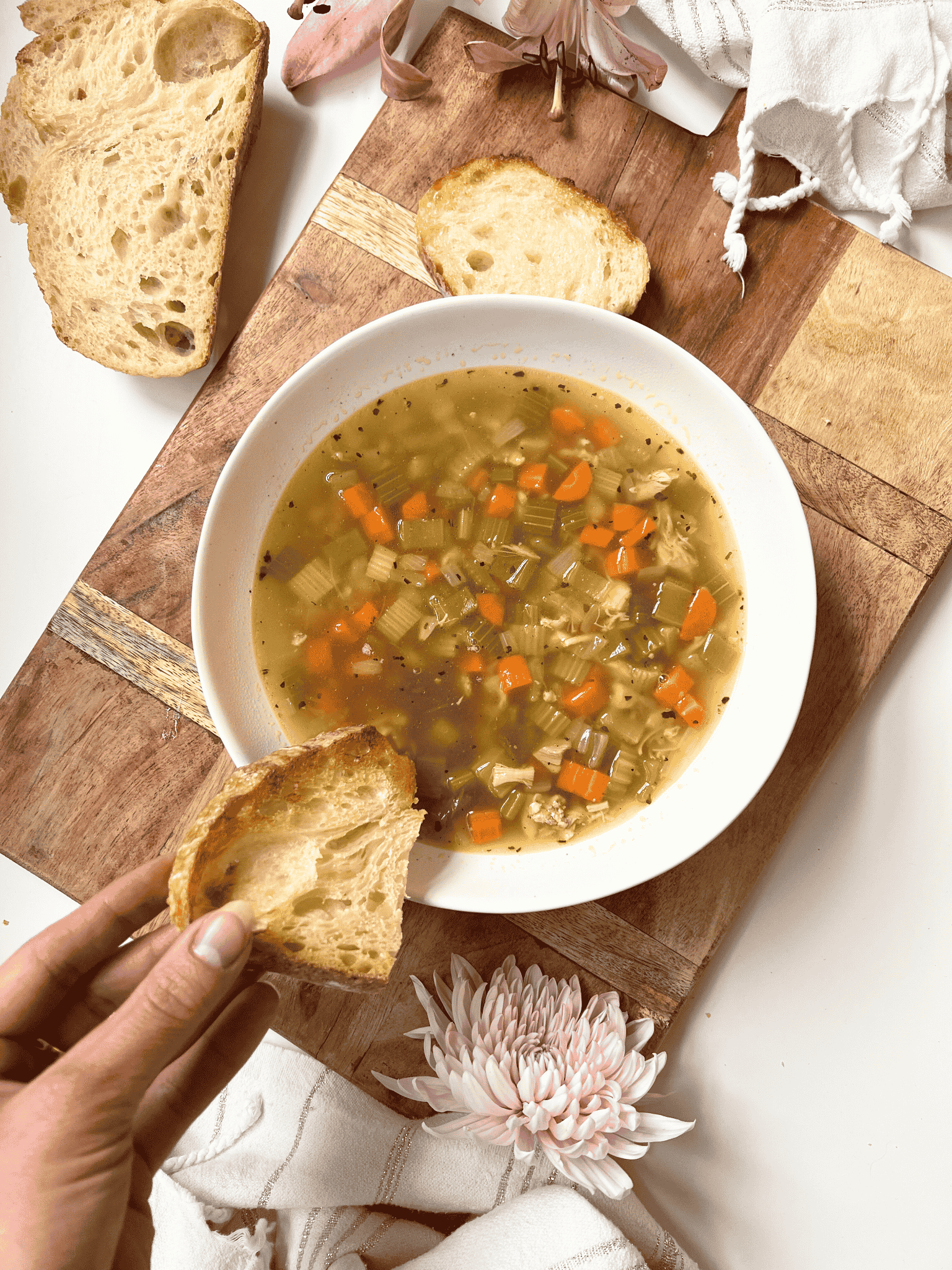
Bone Broth Recipe
How to make nutrient-rich bone broth at home. This is a minimalist recipe, however, you can absolutely add vegetables for flavour and additional nutrients (eg. carrots, celery, onion, and/or fresh herbs).
Ingredients
*Option to add carrots, celery, onion, or fresh herbs*
Instructions
- Roast the Bones (optional): Roast at 400°F for 15–30 minutes to enhance flavor. This step is best for beef bones! You can skip this step for turkey and chicken bones!
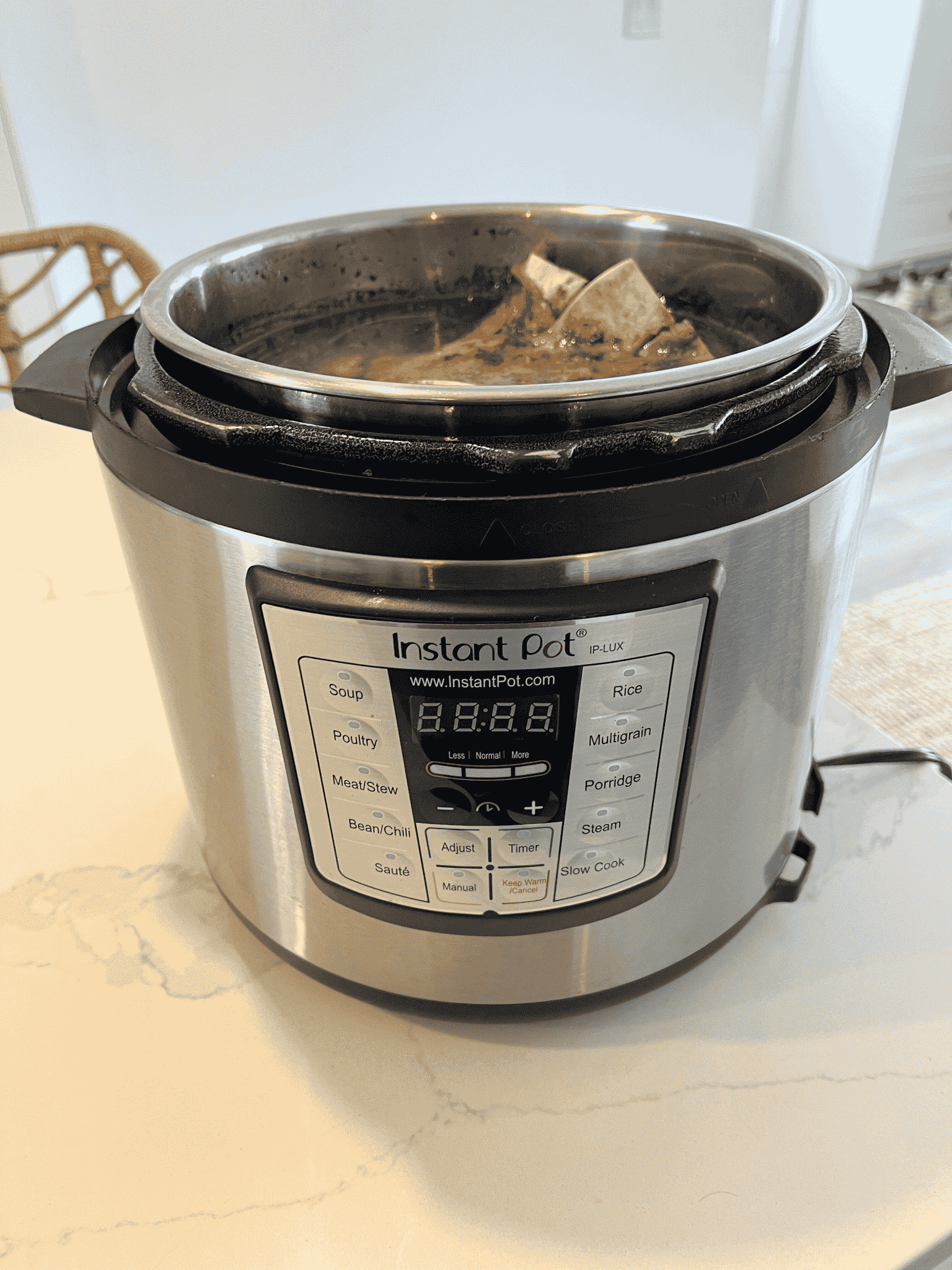
- Option A) Pressure Cooker Method: Add the bones, vinegar, and seasonings to the pressure cooker. Cover the bones with water ensuring there is at least 2 inches of water above the bones. Pressure cook for 2–3 hours. You can end at this stage OR for a more gelatinous and nutrient-dense broth you can simmer for longer. For this, I like to use the slow cook function on the pressure cooker to let the bones simmer for an extra 12–48 hours. The length of time I let the bones simmer depends on when I have time to move through the next step of the process!
- Option B) Slow Cooker Method: Add all of the ingredients and water to the slow cooker. Ensure the water covers the bones by at least 2 inches. Cook on low for 24–48 hours. You may need to add water to the slow cooker every 12 hours as some of the liquid will evaporate.
- Strain: Remove the bones from the broth and discard. Pour the broth through a fine-mesh strainer into a large stainless steel bowl or glass container.
- Cool and Skim: Let the broth cool. The tallow or fat will solidify at the top. Skim off this layer of fat and dispose.
- Store: Refrigerate up to 5 days or freeze for longer.
- Usage: You can enjoy this savoury broth as a hydrating and protein-rich drink or use it in recipes!
What’s Nutritionally Unique About Bone Broth?
When bones simmer slowly, they release:
- Collagen (which forms gelatin when cooled). You’ll know you’ve made a collagen rich broth when it has the texture of Jell-O when cooled!
- Amino acids such as glycine and glutamine which can be difficult to source from more commonly consumed protein sources such as the meat of chicken, beef, fish, and pork.
- Small amounts of minerals including calcium and magnesium.
- Sodium (if adding salt to the broth) which is a key electrolyte to support hydration and muscle function.
Glycine in Pregnancy: An Especially Important Amino Acid!
Glycine is an abundant amino acid in collagen while “muscle meats” contain only trace amounts (eg. ground beef, chicken breast, or a filet of fish). Glycine is abundantly found in connective tissues like tendons, ligaments, and joints. These are the ingredients used to make bone broth making it a rich source of glycine!
Why do we care about glycine in pregnancy? During pregnancy, glycine plays roles in:
- Building of baby’s structure (ie. bones, connective tissue, organs, and blood vessels)
- DNA synthesis and cell division (a steady supply of glycine is required for the high-speed cell division of pregnancy)
- Protecting the mother’s body (skin elasticity, uterine and placental requirements, and joint health)
- Dilation of blood vessels (to support the increased blood volume in pregnancy!)
Emerging research suggests glycine needs increase in pregnancy and may exceed what the body synthesizes independently! In other words, glycine is typically a non-essential amino acid meaning our body can make enough of it on its own. However, in pregnancy, the high demands makes it an essential amino acid meaning pregnant women must obtain it through their diet to meet their needs!
While a variety of protein sources remain essential, incorporating collagen-containing foods like bone broth can contribute additional glycine during this higher-demand period.
Additionally, pregnant women who experience symptoms like nausea, headaches, or reduced appetite may find comfort and support from sipping on warm broth as an easy-to-tolerate protein source that is both nourishing and hydrating!
You can learn more about glycine in pregnancy in Lily Nichol’s (Registered Dietitian) blog titled “Protein Requirements in Pregnancy Are Higher Than Previously Thought” or her best-selling book “Real Food for Pregnancy.”
Bone Broth When Breastfeeding – Why I Recommend It To Breastfeeding Mamas!
Somewhat surprisingly, the calorie and hydration requirements of breastfeeding are even higher than in the third trimester of pregnancy! While bone broth isn’t a food that is specific to supporting milk production (ie. galactagogue), it does support adequate intake of protein, calories, fluids, and electrolytes to fuel, replenish, and rehydrate.
As a dietitian, I often recommend bone broth for clients who have time to make it as a nourishing addition to meals (eg. homemade soup!) or consumed as a warm and hydrating beverage. Some specific reasons to add bone broth when post-partum and breastfeeding include:
- A source of protein which many breastfeeding moms struggle to get enough of!
- Rich in sodium which is a key nutrient when breastfeeding to support hydration status and electrolyte requirements
- A fluid-rich option to meet the increased hydration demands of breastfeeding
For many women in the postpartum period, especially those recovering physically while adjusting to sleep disruption, having nutrient-dense foods ready to go makes a meaningful difference. A batch of homemade broth in the fridge or freezer can be a simple way to support recovery, hydration, and nourishment! Bone broth is a food I'll often recommend mom's prepare in the third trimester and freeze to have available for the busy post-partum window.
Glutamine, Bone Broth, & Athletic Performance
Bone broth is a rich source of glutamine, an amino acid that serves as fuel for intestinal cells. You may have even heard of athletes taking glutamine supplements to support immune health and gut health!
Glutamine plays a role in:
- Supporting recovery during stress (athletes have high physical stress from training!)
- Maintaining intestinal barrier integrity to support gut and immune health (it’s important that athletes reduce the frequency of illness as getting sick disrupts training and competitions)
- Muscle repair (since glutamine is an amino acid)
Glutamine demands can increase during periods of stress, illness, surgery, heavy training, or significant digestive issues which are common experiences for high level athletes. When Dietitian Courtney completed her sports nutrition practicum placement at Winsport in Calgary it wasn’t uncommon for the sports dietitians to recommend a glutamine supplement when athletes were undergoing heavy training or when travelling to prevent them from getting sick!
Glutamine, Bone Broth, & Gut Health Support
Bone broth provides a natural source of glutamine while also offering hydration, protein, collagen, and more!
As discussed, glutamine is an amino acid that contributes to maintaining the lining of the gut for improved intestinal permeability. Why does increased intestinal permeability matter? Think of your gut lining like a filter! Its job is to let nutrients and water into your bloodstream while keeping out harmful triggers. When permeability decreases the gut is unable to protect the body from exposure to undigested food particles or toxins that can cause activation of the immune system and inflammation.
To obtain the most gut health benefits, bone broth works best alongside:
- Adequate fiber
- Adequate protein intake
- Stress management
- Adequate sleep
- Avoidance of personal food intolerances
Moreover, many clients experience comfort from consuming bone broth without triggering symptoms if experiencing a digestive flare up of IBS, diverticulitis, or IBD.
In other words, bone broth may be supportive for digestive health due to its glutamine and protein content! However, digestive health is multifactorial and working with a digestive health dietitian is key if you do have unique digestive health concerns.
Bone Broth in Menopause
During perimenopause and menopause, maintaining muscle mass, bone health, gut health, blood sugars, and joint integrity becomes increasingly challenging due to changes in estrogen and progesterone. Adding collagen-rich foods like bone broth is a supportive strategy to contribute to:
- Increase total protein content to support blood sugar stabilization and muscle tissue recovery
- Support bone mineral density
- Skin elasticity
- Gut health support
“I’ve Heard Collagen Doesn’t Count
Towards My Protein Intake?”
Collagen is not a complete protein source, meaning it does not provide all essential amino acids in optimal amounts for muscle building or meeting total protein needs on its own. Most notably, collagen is lower in leucine – a key muscle-building amino acid. However, collagen does still contribute to your total protein intake and is best used as a complementary protein source alongside complete protein sources like eggs, meat, fish, poultry, dairy, and soy or paired with other complementary proteins like beans, whole grains, and nuts and seeds.
FAQ About Making Homemade Broth
What type of vinegar is best?
Any type of acid can be used in the recipe including apple cider vinegar, white vinegar, or even lemon juice. The acid from the vinegar adds flavour to the broth and also helps to extract additional minerals from the bones!
Where do you get your bones?
Dietitian Courtney is lucky to have access to home-grown beef and beef bones as her parents are cattle farmers! However, you can purchase beef bones from your local butcher. Some of the best bones for broth include the knuckle bones, marrow bones, or oxtail as they are rich in nutrients. If making chicken or turkey broth you will notice that the quality of the bird impacts the quality of the broth. For example, the bones from a rotisserie chicken typically don’t produce as high of a quality of broth. Courtney typically uses the bones leftover from roasting a whole chicken which she purchases from a local company in Saskatoon area called Original Family Farms.
Can you process the bones more than once?
If you are using high quality bones you may be able to do two rounds of broth and obtain a high quality broth both times! Courtney often does a second round on our beef bones and obtains a beautiful broth for the second round. However, Courtney typically only processes turkey or chicken bones one time!
Why didn’t my broth turn into a gel?
A high quality broth that is rich in collagen and gelatin should form a Jell-o like consistency when cooled! However, if the bones were poor quality, the cooking time was too short, or you didn’t have the best bones (eg. knuckle bones) then the broth may be less gelatinous. That said, this doesn’t mean there isn’t value in the broth. It’ll still contain nutrients like collagen!
I don’t want to make bone broth – should I supplement with a bone broth product or collagen?
As a dietitian, I love to focus on obtaining nutrients from whole foods versus supplements whenever possible. However, making bone broth can feel like a part-time job! The roasting, the 12+ hour simmer, the house smelling like a soup kitchen for three days…
If you’re looking for the benefits without the stovetop commitment, the choice between a bone broth supplement or a collagen supplement usually comes down to whether you are trying to achieve something specific.
For example, when working with my one-on-one clients we may decide to supplement with collagen for very specific benefits specific goals like gut health, skin, bone mineral density, or joint health. However, like most supplements, a collagen supplementation does not substitute a diet founded in whole foods.
As discussed in this article, the benefits of collagen extend to unique amino acids it is rich in (eg. glycine and glutamine). However, it is important to note that if you eat a protein-rich diet your body will break those proteins into amino acids to build its own collagen. You don’t need to eat collagen to make collagen!
Summary
Our approach as Registered Dietitians at Vitality Nutrition in Saskatoon, Saskatchewan is never about elevating one food above all others, rather, building a pattern of eating that supports overall health! Bone broth can absolutely have a place in that pattern. Some unique properties of bone broth include:
- Rich in key amino acids that can be difficult to source from other protein foods (ie. glycine and glutamine)
- Rich in collagen protein
- Hydrating with its fluid and mineral content
- Easy to digest when experience illness or digestive upset
- Tasty!
Looking for Personalized Nutrition Support in Saskatoon or Saskatchewan?
Individualized nutrition support matters! At Vitality Nutrition in Saskatoon, we provide evidence-based, practical nutrition support tailored to your life stage and goals.
- Pregnant or planning pregnancy
- Breastfeeding
- Navigating perimenopause or menopause
- Managing digestive concerns
- Training for endurance, strength, or athletic performance
- Working on body composition (i.e. building muscle and losing body fat)
Ready to bring the evidence-based nutrition support of our Registered Dietitians into your kitchen?
Hungry for more?
Get recipes, tips, and updates from the Vitality Nutrition team straight to your inbox!
Don't worry, your information won't be shared.
